
How Money Grows Faster Over Time
This compound growth guide explains one of the most powerful ideas in personal finance in simple terms. Compound growth is what happens when your money begins to earn money on top of money it already earned. Over time, that stacking effect can turn even small savings into something meaningful.
You do not need to be rich. You do not need perfect timing. What matters most is starting and staying consistent.
As the Centsible Future library grows, this guide will expand with calculators, examples, and visual tools.
Compound Growth Guide: What Compound Growth Really Means
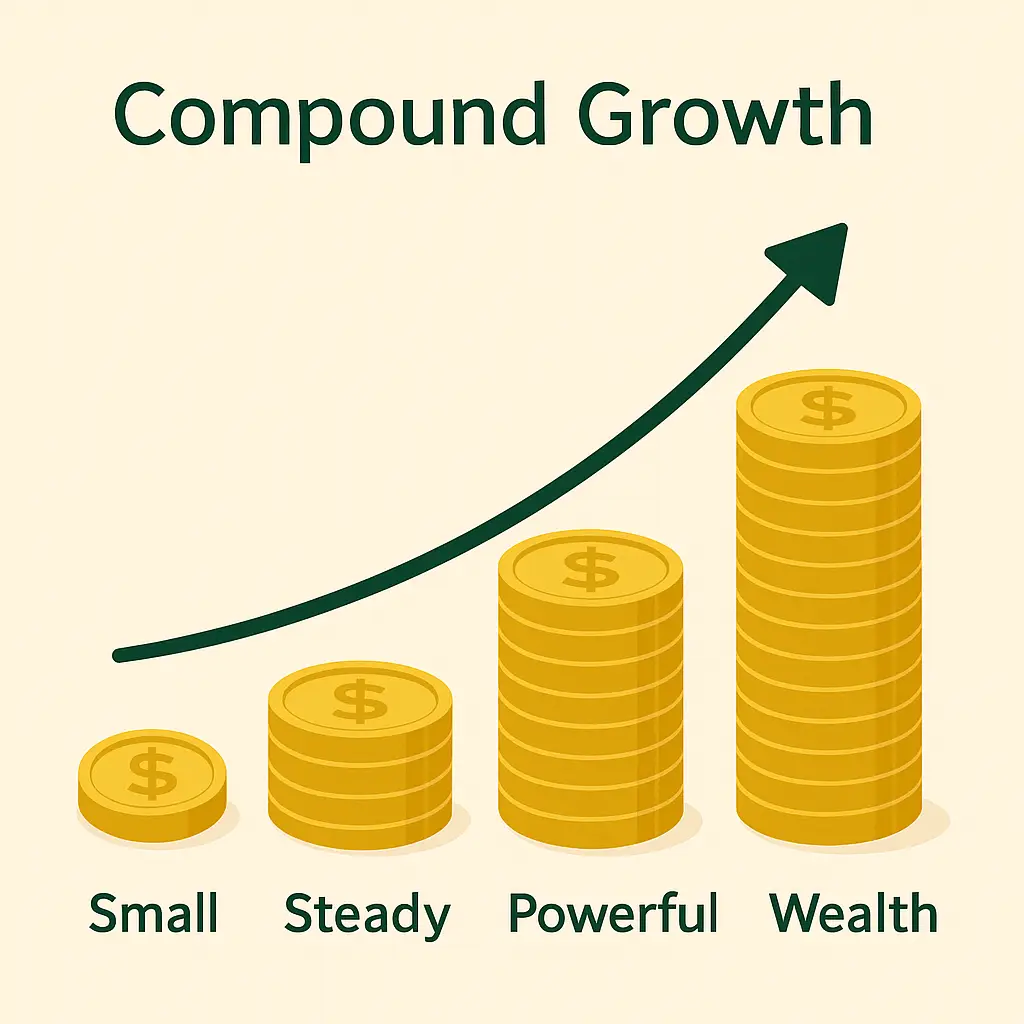
Compound growth happens when your money earns returns, and then those returns start earning returns too. Instead of growing in a straight line, your money begins to curve upward.
At first, growth feels slow. However, over time the increase becomes noticeable. Eventually, it accelerates.
This is why patience matters more than speed.
Why Compound Growth Is More Powerful Than Most People Realize
Many adults underestimate compound growth because the early years feel boring. In the beginning, gains look small. However, the longer you stay invested, the stronger the effect becomes.
The biggest growth often happens:
-
After several years of consistency
-
After reinvesting earnings
-
After increasing deposits gradually
-
After staying invested through market ups and downs
Because of this, time matters more than timing.
Simple Example of Compound Growth
Let’s say you save 50 dollars a week and invest it. In the early months, the balance might not look impressive. However, after a few years, the growth becomes noticeable. After a decade, the curve steepens even more.
This happens because:
-
Your original money grows
-
Your gains grow
-
Then both grow together
That stacking effect is compound growth in action.
Compound Growth vs. Simple Growth
Simple growth adds the same amount each period. Compound growth adds a growing amount each period.
With simple growth:
-
You add 100
-
You earn returns only on that 100
With compound growth:
-
You add 100
-
You earn on the 100
-
Then you earn on the earnings too
Over time, compound growth pulls far ahead.
Where Compound Growth Shows Up in Real Life
Compound growth appears in many areas of money:
-
Investing
-
Retirement accounts
-
Interest-bearing savings
-
ETFs
-
Reinvested dividends
It also works in reverse with debt. When balances grow and interest stacks, debt compounds too.
How to Activate Compound Growth in Your Own Life
You do not need complicated strategies. You only need these four pieces:
-
A place to invest or save
-
Consistent deposits
-
Reinvested earnings
-
Time
Once those are in place, compound growth begins working for you quietly in the background.
Why Small Amounts Still Matter
Many people delay investing because they think small amounts do not matter. In reality, small deposits plus time can outperform large deposits made late.
Starting early gives your money:
-
More years to grow
-
More compounding cycles
-
More chances to stack gains
Even ten or twenty dollars per week can compound into real results over time.
What Breaks Compound Growth
Compound growth works best when money is left alone. These behaviors weaken it:
-
Pulling money out too often
-
Panic selling during downturns
-
Skipping deposits for long periods
-
Chasing fast profits
-
Jumping between strategies
Consistency protects the curve.
Compound Growth and ETFs Work Extremely Well Together
ETFs are designed for long-term investing and diversification. Because of that, they pair perfectly with compound growth. When you invest regularly into ETFs and reinvest gains, the growth curve becomes smoother and stronger over time.
This is why ETFs show up in so many retirement and long-term investing plans.
The Emotional Side of Compound Growth
Compound growth rewards patience. Unfortunately, patience feels uncomfortable at first. It often feels like nothing is happening. Then one day, the numbers change faster than expected.
Most people quit just before the curve bends upward.
Those who stay win quietly.
Where to Go Next
To start building your compound growth foundation, read:
For official beginner education, visit:
https://www.investor.gov/introduction-investing/investing-basics/compound-interest
This compound growth guide will continue to grow with calculators, timelines, and real-life examples to show how powerful this effect truly is.